A deck inspection repairs deadline may begin as soon as the owner receives the report, and an immediate safety finding requires immediate preventive action. Putting the report aside can turn a manageable repair process into an access problem, a permit problem, an enforcement problem, or a resident-confidence problem.
This article is for apartment owners, HOA boards, and property managers who have received an inspection report but have not yet converted the findings into action.
Is receiving the report the end of the inspection process?
No. The report is the decision document, not the finish line.
It should tell the owner or association what was inspected, what condition the professional observed, whether further investigation is recommended, which findings require repair, and whether any condition poses an immediate threat.
The next step is to separate the findings into practical categories: immediate safety measures, further professional evaluation, permit and design work, planned corrective construction, maintenance, monitoring, and record retention.
Treating every finding as an emergency creates confusion. Treating the entire report as optional maintenance can be worse.
What happens when the report identifies an immediate threat?
Immediate-threat findings require immediate preventive measures.
For an SB 721 apartment property, Health and Safety Code section 17973 allows compliance through immediately preventing occupant access until emergency repairs can be completed. The inspector must provide the applicable report to the owner and local enforcement agency within 15 days after completion.
For an SB 326 condominium project, Civil Code section 5551 requires the inspector to deliver an immediate-threat report to the association immediately and to the local code enforcement agency within 15 days. The association must take preventive measures immediately, including preventing access until repairs are inspected and approved by the local enforcement agency.
An emergency finding should not be placed into a normal three-bid schedule while residents continue using the element. Secure the area, follow the inspector’s direction, and coordinate the required professional, permit, and construction response.
How long do apartment owners have for non-emergency SB 721 repairs?
For corrective work that does not pose an immediate threat, section 17973 generally requires the owner to apply for a permit within 120 days after receiving the inspection report.
Once the permit is approved, the owner generally has 120 days to complete the repairs unless the local enforcement agency grants an extension. If required corrective work remains incomplete, the statute contains notification, enforcement, daily-penalty, and building-safety-lien provisions.
Those periods can move quickly when drawings, engineering, contractor pricing, resident access, materials, and permit review are required. Waiting until day 100 to develop a scope is not the same as having 100 days available for construction.
Do HOA repair deadlines work the same way?
SB 326 does not use the same 120-day permit language for every non-emergency finding. The association must follow Civil Code section 5551, the inspector’s recommendations, applicable local requirements, and its governing documents.
The absence of an identical statewide countdown does not make the report optional. Boards have continuing responsibilities for association-maintained exterior elevated elements, and immediate threats require immediate measures.
The board should place the report into a documented review process, obtain appropriate professional and legal guidance, address reserve implications, and establish a realistic schedule for necessary repair or replacement.
Can a condition become more expensive while we wait?
It can, particularly when water is involved, but no one should claim that every delay automatically causes structural failure or a specific cost increase.
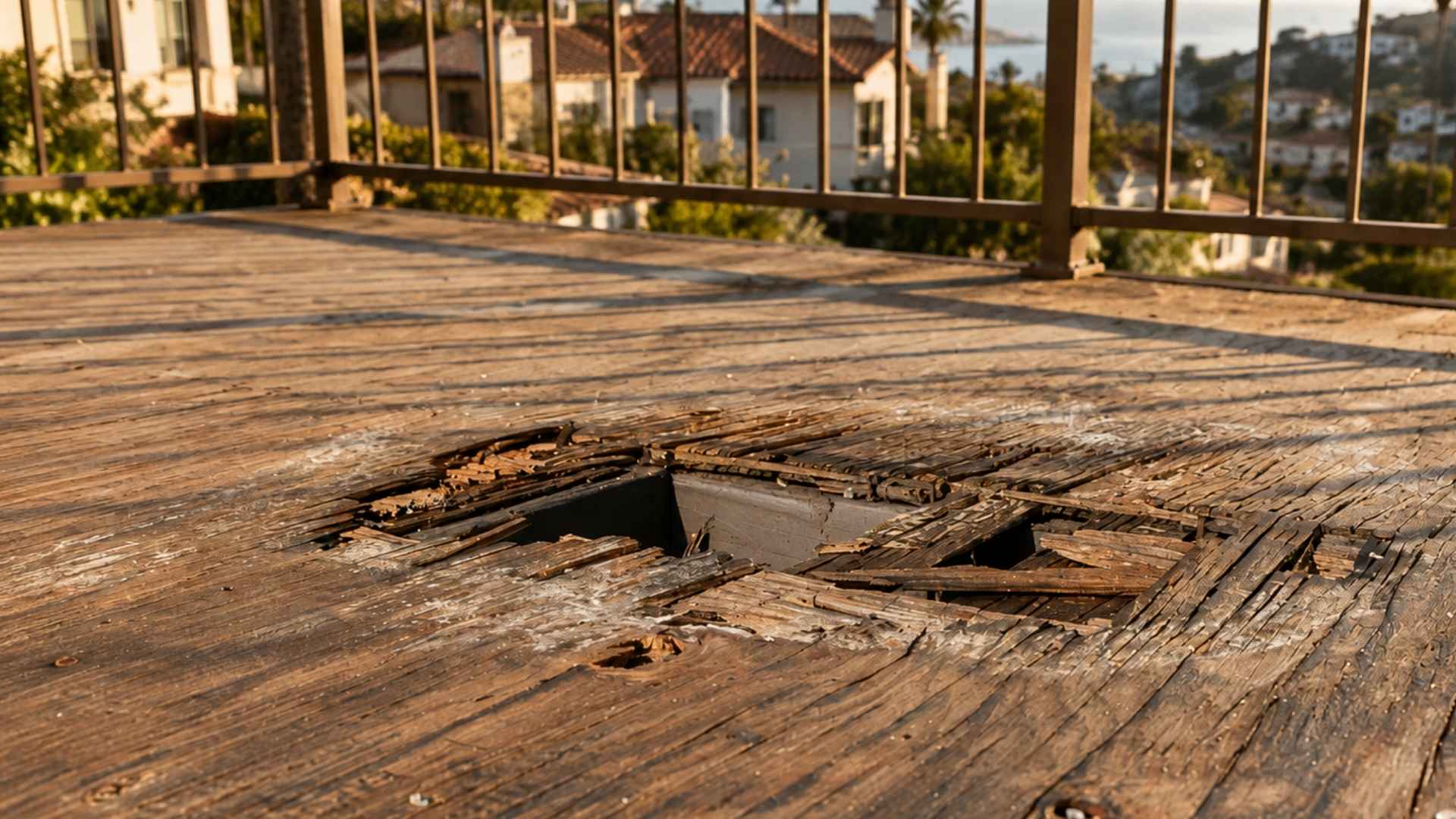
Failed sealants, membranes, flashings, drains, or edge details can allow continuing moisture exposure. The extent of concealed deterioration may remain uncertain until the authorized professional recommends further investigation or construction exposes the assembly.
Prompt scope development helps the owner distinguish a defined maintenance or localized repair from a condition requiring broader structural or waterproofing work. Delay preserves uncertainty; it does not resolve it.
Why are vague repair bids dangerous?
A bid that says “repair balconies” without responding to the inspection findings can leave critical responsibilities unassigned.
A usable proposal should identify which findings it addresses, what investigative or design assumptions it makes, who handles permits, what access and resident coordination are included, how concealed conditions will be documented, and what closeout records will be provided.
The owner should also understand whether the authorized inspector or another design professional must review the completed repairs. A contractor’s final invoice alone may not satisfy the inspection report, local agency, HOA, or future-record requirements.
Who turns the report into a repair plan?
Balcony & Deck Advisors helps owners, boards, and property managers understand inspection findings and identify the appropriate next step. The statutory report remains the work of the authorized inspection professional.
When construction is recommended, affiliated company LA Construction Consultants (CSLB License #1061967) can separately review the findings, prepare a construction scope and proposal, coordinate design professionals and permits when required, and perform approved repairs. Owners and boards may compare that proposal with other qualified bids.
Keeping those roles clear makes it easier to trace each repair decision back to an actual report finding.
What should we do in the first seven days after receiving the report?
First, read the entire report and identify any access restriction, immediate-threat finding, or required notice. Second, send the report to the people responsible for professional review, property operations, and decision-making. Third, calendar every stated and statutory deadline.
Then create a finding-by-finding action log showing:
The location and report reference;
The condition and priority stated by the inspector;
Any temporary safety measure;
Whether further evaluation or design is needed;
Permit responsibility;
Proposed corrective scope;
Resident-access and communication requirements;
Target completion date; and
Final inspection and closeout documentation.
Do not wait for the next routine budget cycle to acknowledge an immediate finding. Do not let a non-emergency finding vanish simply because the deck remains open.
What does successful closeout look like?
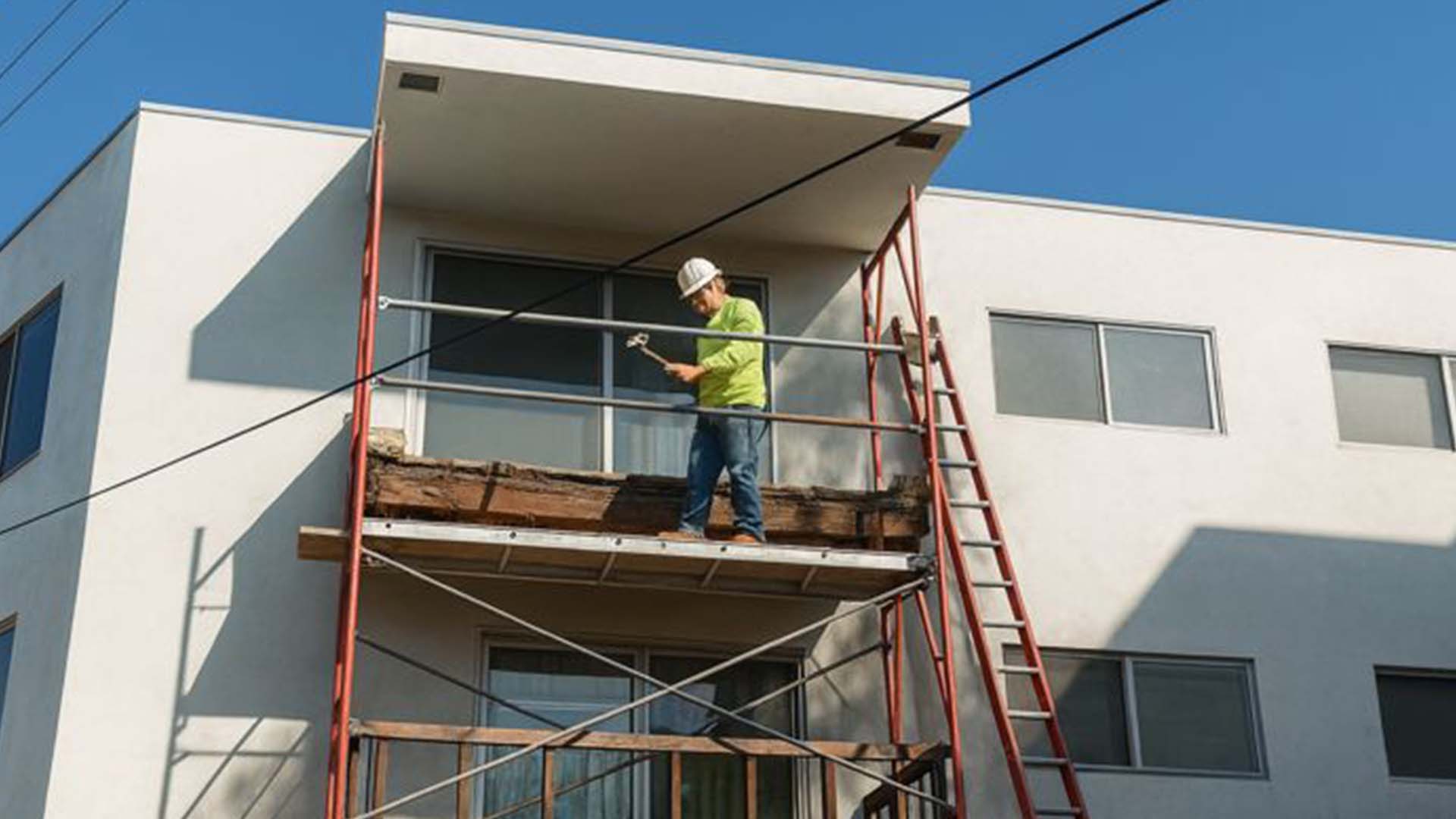
Successful closeout connects the inspection finding to the completed response. Depending on the project, the file may include the approved scope, contracts and changes, professional plans, permits, photographs of concealed and completed work, product information, warranties, inspection sign-offs, and written confirmation required by the inspector or local agency.
Keep the original report with the repair file. Future managers, inspectors, board members, buyers, and owners should be able to understand what was found and what was done.
Related reading: How HOAs prioritize SB 326 repairs · Budgeting for SB 721 and SB 326 repairs · Balcony repair versus replacement
Next step: If you have an inspection report with open findings, request a free project review through our deck and balcony inspection page or call 424-946-8057 before the next deadline arrives.
Written October 20, 2026. This article provides general information, not legal or engineering advice. Follow the actual report, applicable code provisions, local requirements, and advice of qualified professionals.