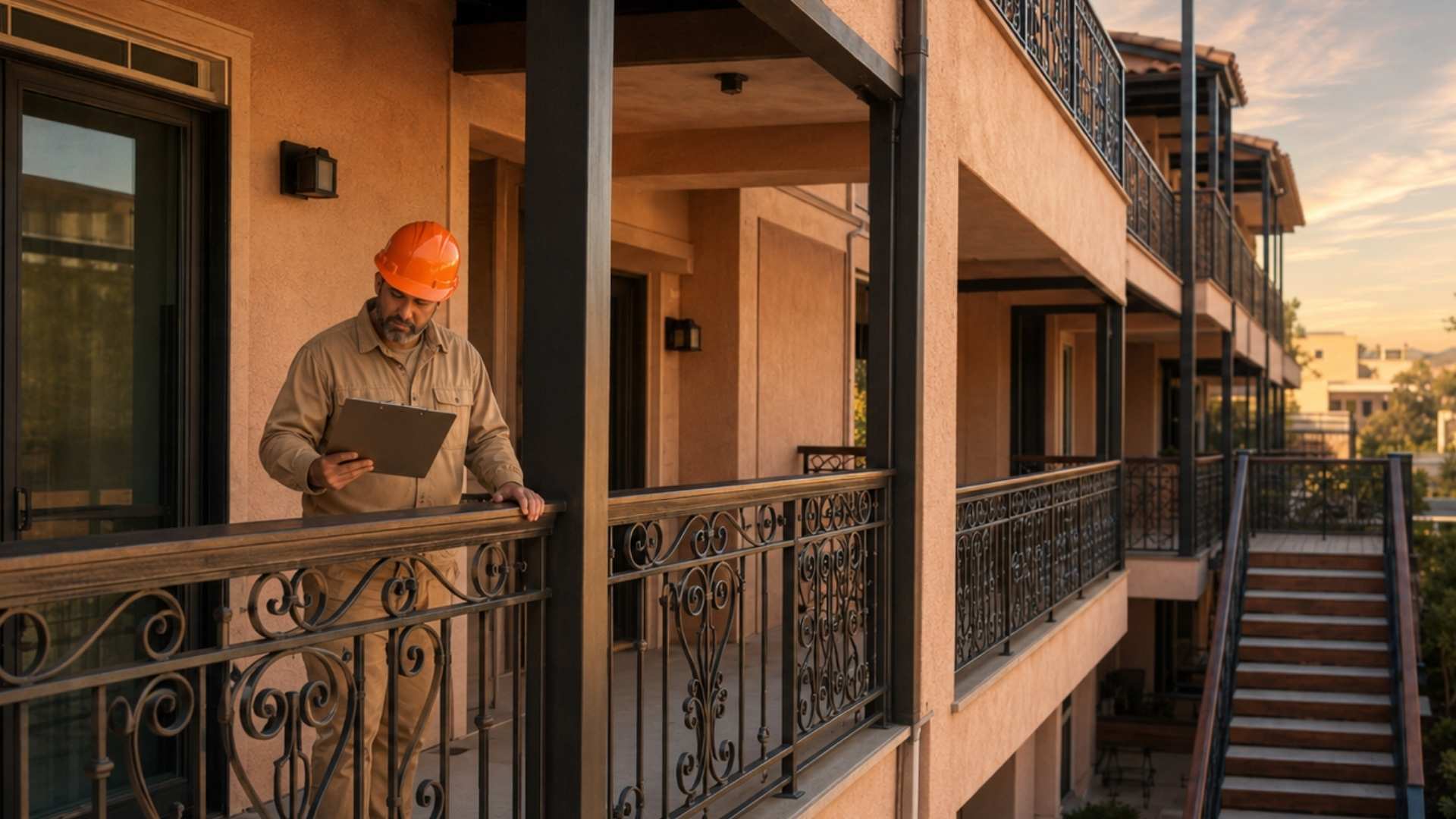
A California balcony inspection report does more than summarize what an inspector saw during a site visit.
For apartment owners, HOA boards, and property managers, the report becomes the formal record of what was inspected, what conditions were observed, and what follow-up may be recommended.
SB 721 and SB 326 reports are not identical because the two laws apply to different property types and use different inspection frameworks.
Understanding what the report is intended to document can make it much easier to determine what needs attention next.
What an SB 721 Inspection Report Is Intended to Document
For qualifying multifamily rental properties, an SB 721 inspection report establishes a written record of the condition of the exterior elevated elements that were inspected.
The report is intended to provide a baseline that can be compared with future inspections.
Depending on the property and findings, the report may include:
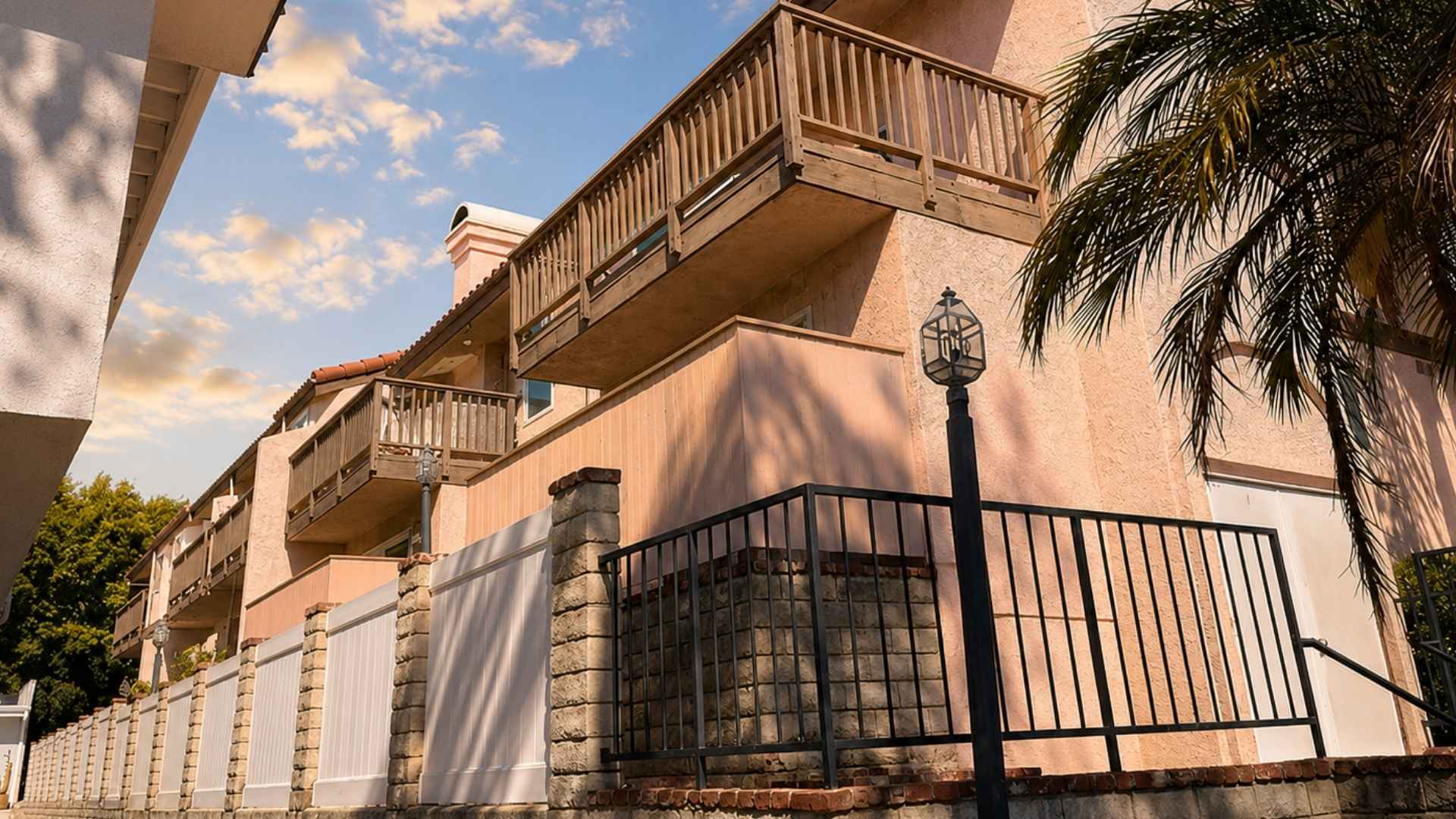
The exterior elevated elements that were inspected
The condition of visible structural components
The condition of associated waterproofing systems
Photographs of inspected areas
Applicable test results
Observations regarding deterioration or moisture intrusion
Recommendations for additional inspection or evaluation
Comments regarding expected future performance or service life
Identification of any conditions that may present an immediate threat to occupant safety
The exact format may vary by inspector, but the purpose is to clearly document the observed condition of the inspected elements.
Photographs Are an Important Part of the Record
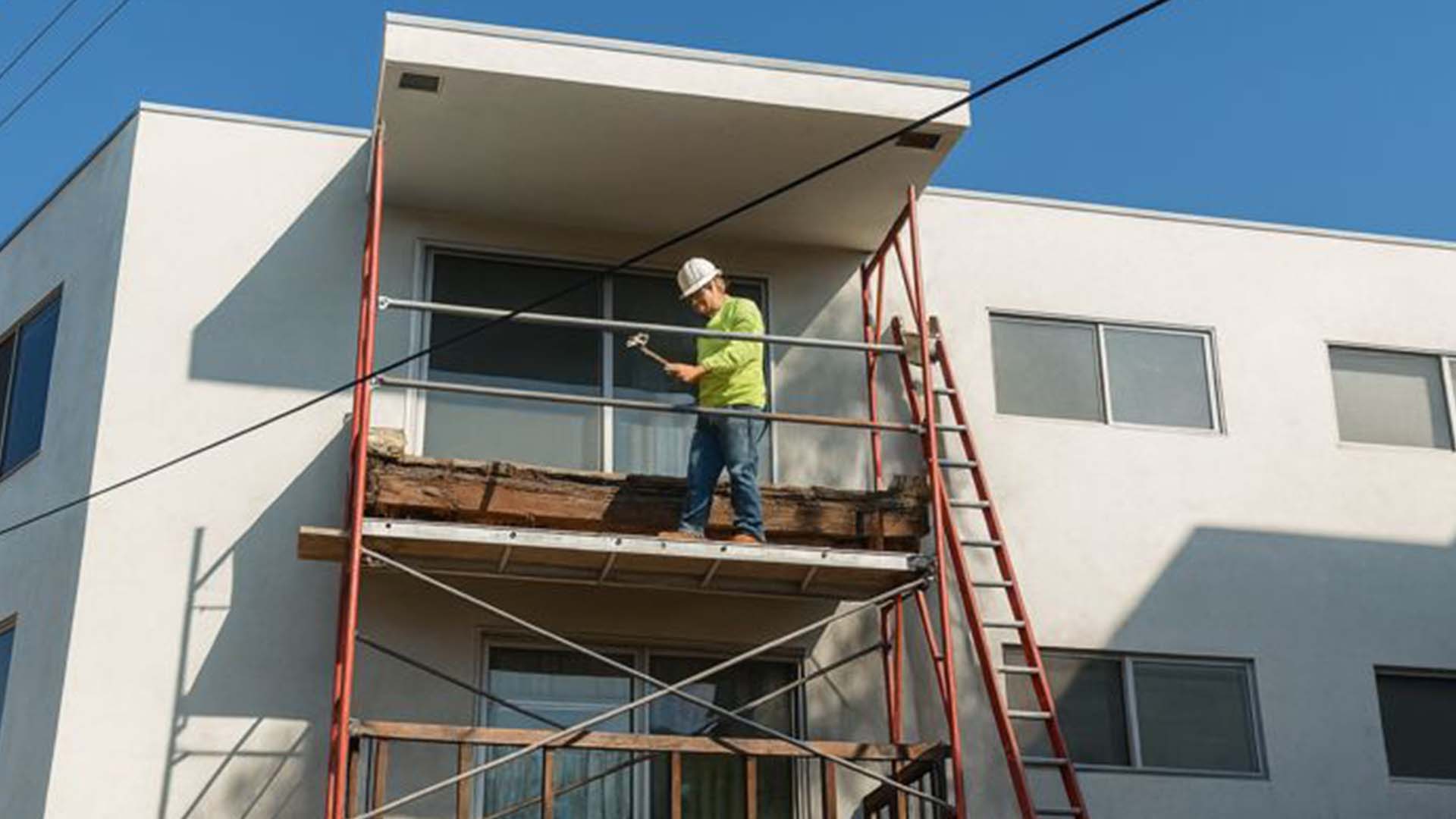
Photographs help establish what the inspector observed at the time of the inspection.
They can also help owners, future inspectors, design professionals, and contractors understand where a particular finding is located.
That becomes especially useful when several balconies, stairways, or walkways have similar configurations.
Because SB 721 inspections recur over time, good photographic documentation can also make future comparisons easier.
Not Every Finding Means the Same Thing
A balcony inspection report may identify several different types of findings.
Some may involve maintenance.
Others may call for monitoring.
Some conditions may warrant additional investigation.
Others may require corrective construction.
The most important distinction is whether the inspector identifies a condition as an immediate safety concern.
Owners should rely on the inspector’s actual findings and recommendations rather than assuming that every item listed in a report requires the same response.
What an SB 326 Inspection Report Is Intended to Document
SB 326 applies to qualifying condominium projects and requires inspection by a licensed civil engineer, structural engineer, or architect.
The inspection report documents the condition of the inspected exterior elevated elements and the inspector’s professional evaluation of those elements.
The report generally addresses:
The exterior elevated elements included in the inspection sample
Observed structural conditions
Waterproofing and moisture-related conditions
Expected future performance or useful life
Recommendations for repair or replacement where appropriate
Conditions that may require further investigation
Any immediate threats to occupant safety
SB 326 reports can also become important association records for long-term planning and future inspection cycles.
SB 326 Reports Now Include Additional First-Page Information
Current California law requires specific information to appear on the first page of an SB 326 inspection report.
That information includes items such as:
The date of the inspection
The total number of units in the condominium project
The number of units with exterior elevated elements
The total number of exterior elevated elements in the project
The number of exterior elevated elements inspected
The number of inspected elements identified as presenting an immediate threat to occupant safety
The number of units affected by those immediate-threat findings
Certification regarding the required visual inspection and statistically significant sample
These requirements make the report easier for boards, managers, and future reviewers to understand at a glance.
The Report Can Matter Beyond the Inspection Itself
For condominium associations, the inspection report should be treated as an important association record.
The report may remain relevant for:
Future inspection cycles
Reserve planning
Board decision-making
Property maintenance records
Repair planning
Resale disclosures
Requests for association records
That means the report should be stored in a location where future boards and managers can retrieve it easily.
What an Inspection Report Is Not
This is one of the most important distinctions for owners and boards.
A balcony inspection report is not automatically:
A contractor’s repair estimate
A complete construction scope
A structural repair design
An architectural plan set
A permit application
A waterproofing specification
A final construction budget
The inspection report identifies conditions and recommendations.
Turning those recommendations into a construction project can require a separate review by a contractor, architect, engineer, or other qualified professional depending on the scope.
What Should You Do After Receiving the Report?
Start by reading the inspector’s conclusions and recommendations carefully.
Identify whether the report includes:
Immediate safety concerns
Recommendations for additional investigation
Maintenance items
Corrective work
Long-term monitoring recommendations
For HOA boards, make sure the report is entered into the association’s formal records.
For multifamily owners, retain the report with the property’s inspection and maintenance documentation.
If the report recommends corrective construction, provide the complete report to the contractor or design professional evaluating the work.
When the Report Moves Into the Repair Phase
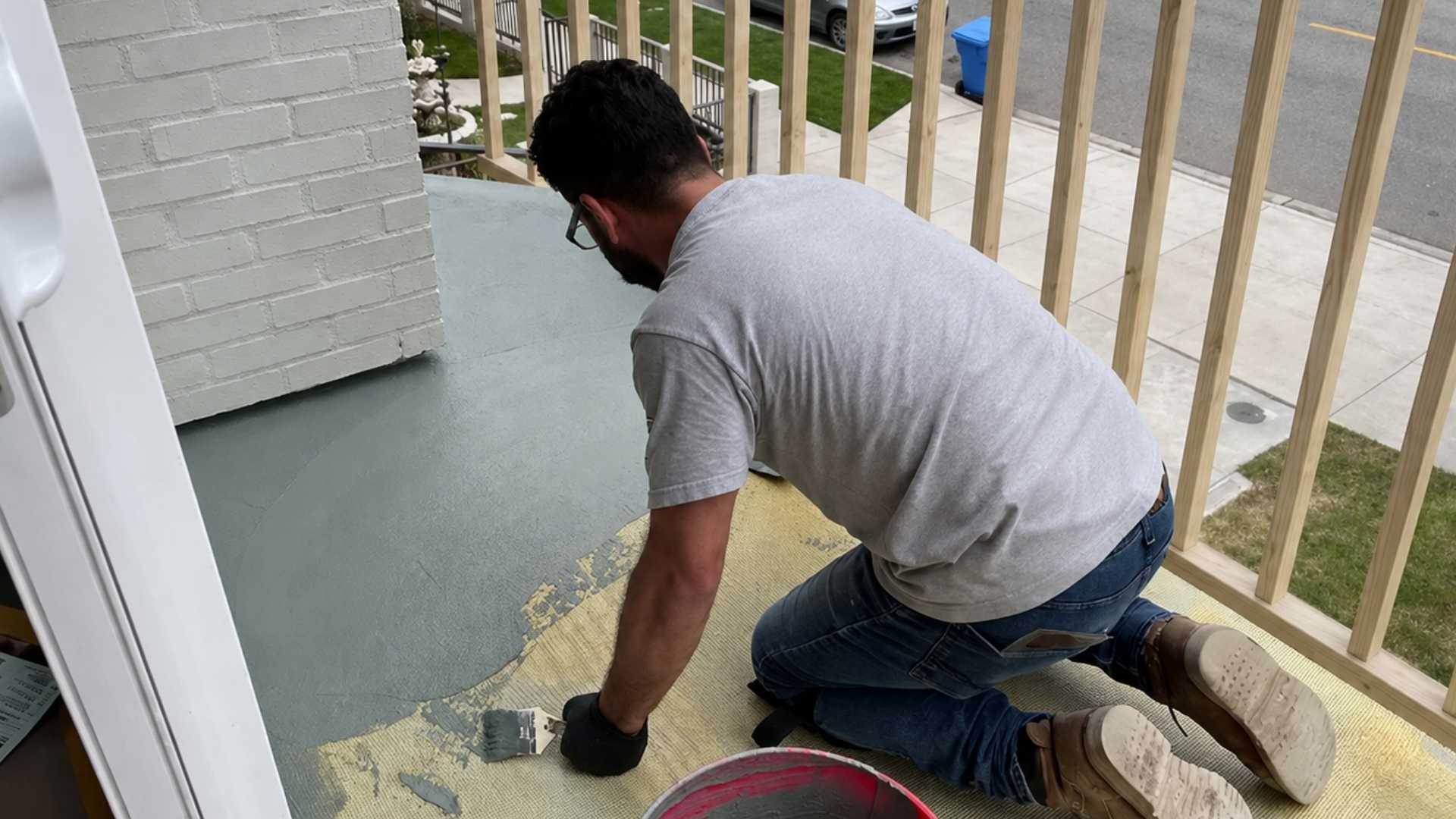
When repair work is recommended, the inspection report becomes the starting point for construction planning.
LA Construction Consultants can review the findings, develop a proposed repair scope and budget, coordinate licensed architects or engineers when required, address applicable permitting requirements, and perform approved repair work.
That keeps the roles clear.
Balcony & Deck Advisors focuses on the inspection process and documentation.
LA Construction Consultants focuses on the construction that may follow.
If you need an SB 721 or SB 326 balcony inspection in Los Angeles, Balcony & Deck Advisors can help coordinate the appropriate inspection path and guide you through the process from scheduling through the final report.