How Should an HOA Prepare for an SB 326 Balcony Inspection?
An SB 326 inspection affects more than the balconies themselves.
For an HOA board or community manager, the project may involve engineering coordination, governing documents, resident access, property records, multiple buildings, and communication with homeowners.
Preparing those pieces before inspection day can make the process more efficient and help the association maintain better records afterward.
Confirm the Property Falls Within the SB 326 Framework
Before scheduling, establish that the property is subject to the applicable condominium exterior elevated element inspection requirements.
SB 326 generally applies to qualifying condominium projects containing three or more attached multifamily dwelling units where the association has maintenance or repair responsibility for covered exterior elevated elements.
Ownership structure matters.
The fact that a development has an HOA does not automatically mean every elevated element at the property falls within the association’s inspection responsibility.
Review the Governing Documents
Association maintenance and repair responsibility is important under Civil Code Section 5551.
Before the inspection, management should make relevant governing documents available when they help establish which exterior elevated elements are maintained or repaired by the association.
Depending on the development, responsibility for balconies and related components may be addressed in the declaration, CC&Rs, condominium plan, maintenance matrix, or other governing documents.
When responsibility is unclear, the association may need appropriate legal guidance.
Gather Existing Property Records
Useful records can include:
Architectural plans
Structural plans
Previous exterior elevated element reports
Prior balcony or stair repair documentation
Waterproofing records
Reserve studies
Known leak records
Construction defect documentation, when applicable
Records of significant alterations
Not every association will have a complete archive, especially in older developments.
Provide what is reasonably available rather than postponing the inspection while searching indefinitely for documents that may no longer exist.
Identify Exterior Elevated Elements Throughout the Community
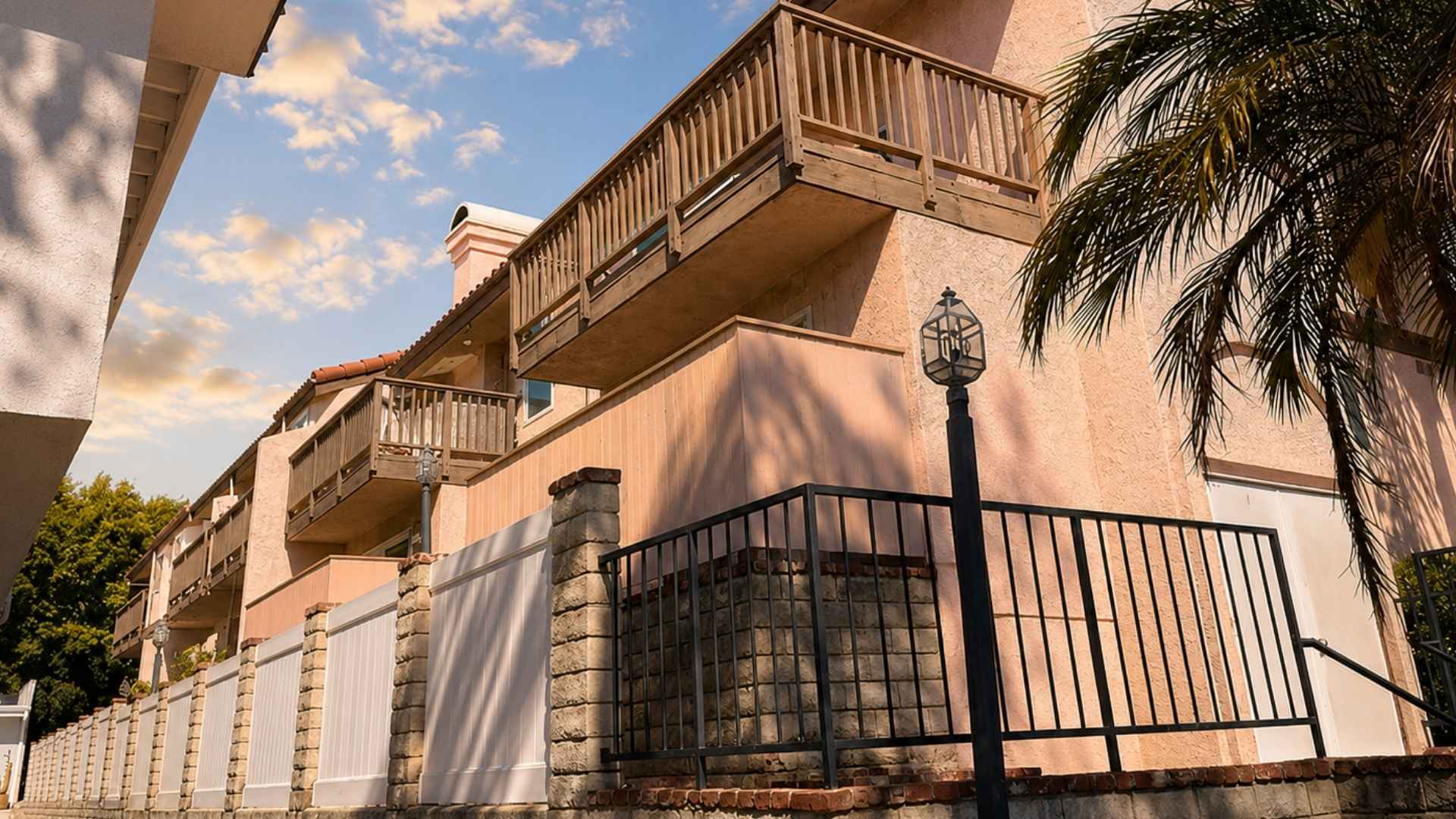
Larger condominium communities may contain several buildings and multiple types of balconies, decks, stairs, or walkways.
Management should help establish where those elements are located.
A property map, unit list, building plan, or even a well-organized management inventory can help the inspection team understand the site.
That becomes especially important because SB 326 uses a statistically significant inspection sample rather than simply examining an arbitrary number of balconies.
Plan Resident Access Before Inspection Day
Some balconies and decks are only accessible through individual condominium units.
The HOA or management company should identify which residences may require entry and establish the appropriate notice process.
Residents should receive enough information to understand:
Why access is needed
The anticipated inspection date or window
Whether someone must be home
Whether management will provide access
What needs to be moved from the balcony
Who residents should contact with scheduling questions
Clear communication reduces missed access and rescheduling.
Ask Residents to Provide Reasonable Balcony Access
Furniture, storage containers, bicycles, planters, rugs, and other belongings can interfere with inspection.
Residents should be asked to provide reasonable access to the balcony or deck before the scheduled visit.
The inspector may need to see walking surfaces, perimeter conditions, railing areas, wall interfaces, drainage locations, or other visible components.
Specific requirements can vary based on the construction.
Coordinate With On-Site Management
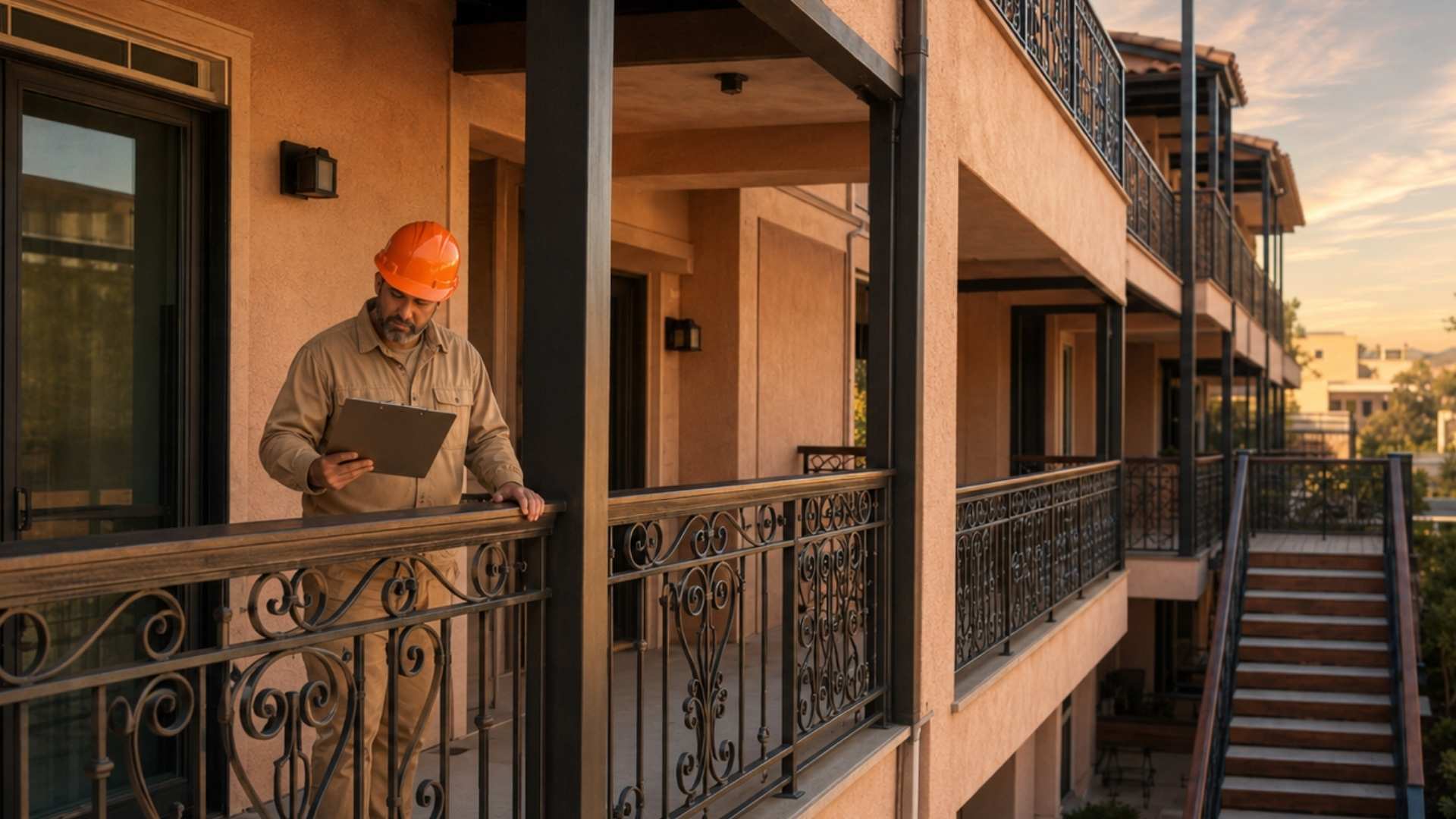
For larger communities, an on-site manager, maintenance representative, or board liaison should ideally be available.
That person can assist with:
Building identification
Unit access
Keys and gates
Parking
Known leak locations
Previous repairs
Resident questions
Locked common areas
Efficient site coordination matters when inspections involve multiple buildings or dozens of possible locations.
Tell the Inspector About Known Conditions
If the board or management is already aware of recurring leaks, previous balcony deterioration, railing movement, prior emergency work, or other significant conditions, provide that information.
An SB 326 inspection is intended to evaluate the actual condition of qualifying exterior elevated elements.
Historical information can give the inspector useful context.
Plan for the Report Before It Arrives
The association should also decide who will receive and retain the completed report.
Current California law makes SB 326 reports increasingly important association records.
SB 410 changes effective in 2026 added reporting and disclosure requirements, including specific first-page information and inclusion of the most recent Section 5551 inspection report in certain resale disclosures.
For that reason, the report should not simply disappear into an email inbox after the inspection.
Boards should have an organized process for retaining the report and making it available when legally required.
Remember That the Inspection and Construction Are Separate Phases
An SB 326 report may recommend maintenance, further evaluation, or corrective construction.
The inspector’s report is not necessarily a complete construction bid or repair design.
When construction is recommended, the association can separately move into the repair-planning phase.
LA Construction Consultants can review the inspection findings, develop a construction proposal, and coordinate licensed design professionals and permitting when required.
Balcony & Deck Advisors focuses on the inspection side of that process.
If your HOA or condominium community is preparing for an SB 326 inspection in Los Angeles, contact Balcony & Deck Advisors to discuss the property and inspection coordination.
What Should You Expect in an SB 721 or SB 326 Balcony Inspection Report?
The inspection may take place in a day or several days.
The report, however, can remain important for years.
A California balcony inspection report establishes what was inspected, what the inspector observed, and what follow-up may be recommended. For owners, HOA boards, and property managers, understanding what the report is supposed to accomplish makes it easier to use the information correctly.
SB 721 and SB 326 reports are not identical because the two statutes apply to different properties and use different inspection frameworks.
What an SB 721 Inspection Report Is Intended to Document
For qualifying apartment and multifamily properties, Health & Safety Code Section 17973 requires a written report following the inspection.
The report is signed or stamped by the inspector and is intended to establish a baseline condition that can be compared with future inspections.
It generally addresses:
The exterior elevated elements evaluated
Their current condition
Expected future performance and projected service life
Recommendations for further inspection where appropriate
Photographs
Applicable test results
A narrative sufficient to document the condition of the inspected components
The report also identifies whether an inspected exterior elevated element poses an immediate threat to occupant safety and whether preventive measures or emergency repairs may be necessary.
Why Photographs Matter
Photographs provide more than visual decoration.
They help establish the condition observed at the time of inspection and can make it easier for an owner, future inspector, design professional, or contractor to understand the location being discussed.
Good documentation is especially valuable because SB 721 inspections recur over time.
The report becomes part of the property’s inspection history.
SB 721 Reports Can Identify Different Levels of Concern
Not every observation has the same significance.
A report may discuss maintenance conditions, deterioration, the need for further investigation, corrective work, or an immediate safety concern.
Owners should pay attention to the inspector’s specific recommendation rather than simply counting the number of items listed.
An immediate-threat finding carries different implications from a recommendation to monitor or maintain a condition.
What an SB 326 Report Is Intended to Document
SB 326 reports are prepared under Civil Code Section 5551 for qualifying condominium projects.
The inspection must be performed by a licensed structural engineer, civil engineer, or architect.
The report addresses the condition of the inspected exterior elevated elements and includes information relevant to their expected future performance and useful life, as well as recommendations for necessary repair or replacement.
SB 326 also connects the inspection information with the association’s reserve-study process.
That makes the report relevant not only to immediate safety questions but also to longer-term association planning.
SB 410 Added New First-Page Requirements in 2026
Effective January 1, 2026, SB 410 changed several aspects of the SB 326 reporting and disclosure framework.
Civil Code Section 5551 now requires specified information on the first page of the report.
That information includes:
The inspection date
The total number of units in the condominium project
The number of units with exterior elevated elements
The total number of exterior elevated elements in the project
The number inspected
The number of inspected elements identified as posing an immediate threat to occupant safety and the number of units affected
Certification concerning the required visual inspection and statistically significant sample
For HOA boards and community managers, these additions make the report easier to identify and review as an important association record.
The Most Recent SB 326 Report Can Matter During a Sale
SB 410 also expanded the importance of the report beyond the inspection itself.
The most recent inspection report under Section 5551 is now included among the documents addressed by California condominium resale disclosure requirements.
Inspector reports under Section 5551 are also specifically treated as association records under the current statutory framework.
Boards should therefore maintain these reports carefully rather than treating them as temporary construction documents.
What an Inspection Report Is Not
One of the most important things for an owner or board to understand is what the inspection report does not necessarily provide.
An inspection report is not automatically:
A contractor’s bid
A final construction scope
A repair permit
A structural repair design
An architectural plan set
A waterproofing specification
A guaranteed construction budget
The report documents conditions and recommendations.
Turning those recommendations into construction can require a separate process.
What Should You Do After Receiving the Report?
Read the inspector’s actual recommendations carefully.
Identify any immediate-safety findings first.
Then separate recommendations for maintenance, further investigation, and corrective construction.
Keep the complete report, photographs, and supporting documentation together.
For an HOA, make sure the report enters the association’s formal recordkeeping process.
If corrective construction is recommended, provide the complete report to the contractor or design professionals evaluating the repair.
LA Construction Consultants can review repair recommendations and develop a construction proposal when an inspection identifies work that needs to be performed.
Balcony & Deck Advisors focuses on helping owners and associations get through the inspection stage with a clear understanding of what was inspected and what the report means.
If you need an SB 721 or SB 326 inspection in Los Angeles, contact Balcony & Deck Advisors to discuss your property and the appropriate inspection process.