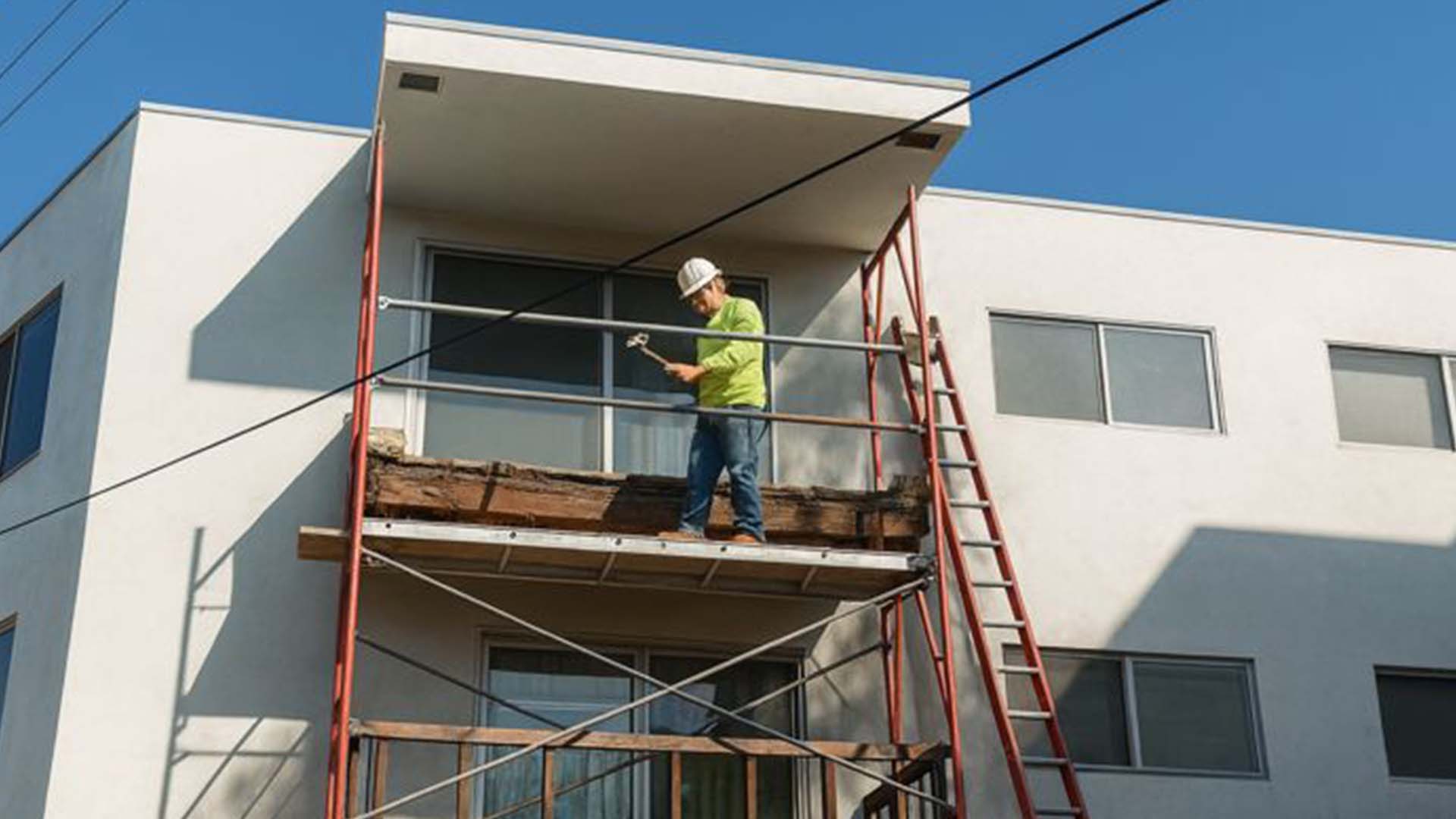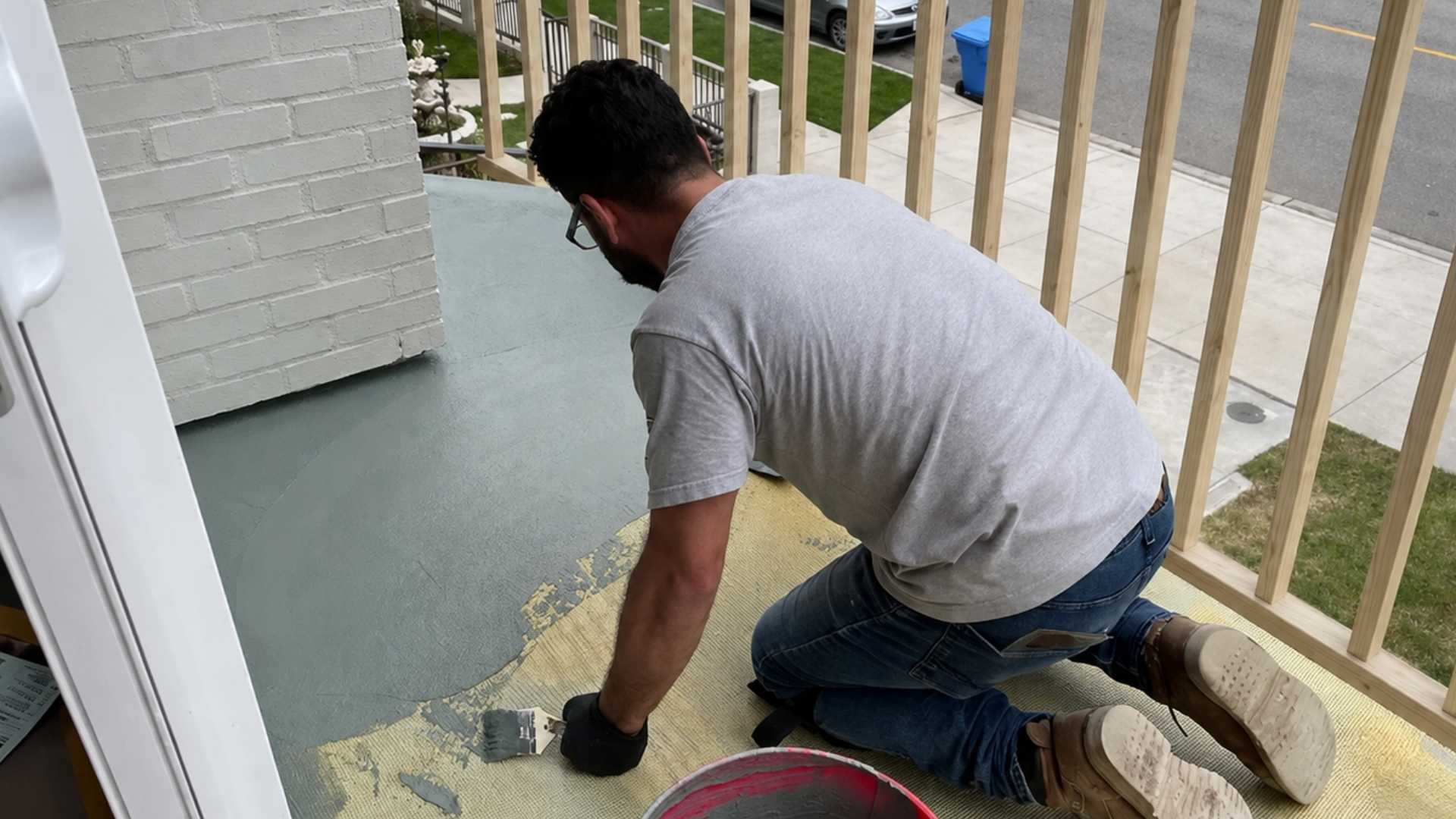
When a tenant reports an unsafe deck, the owner or property manager should document the concern, control access if the condition appears dangerous, and arrange prompt review by a qualified professional. The wrong response is either to dismiss the tenant or to declare the structure unsafe without competent evaluation.
This article is for apartment owners and property managers dealing with a complaint about movement, cracking, water intrusion, deterioration, or a loose railing.
Is a tenant complaint proof that the deck is unsafe?
No. A resident’s observation is important, but it is not a structural conclusion.
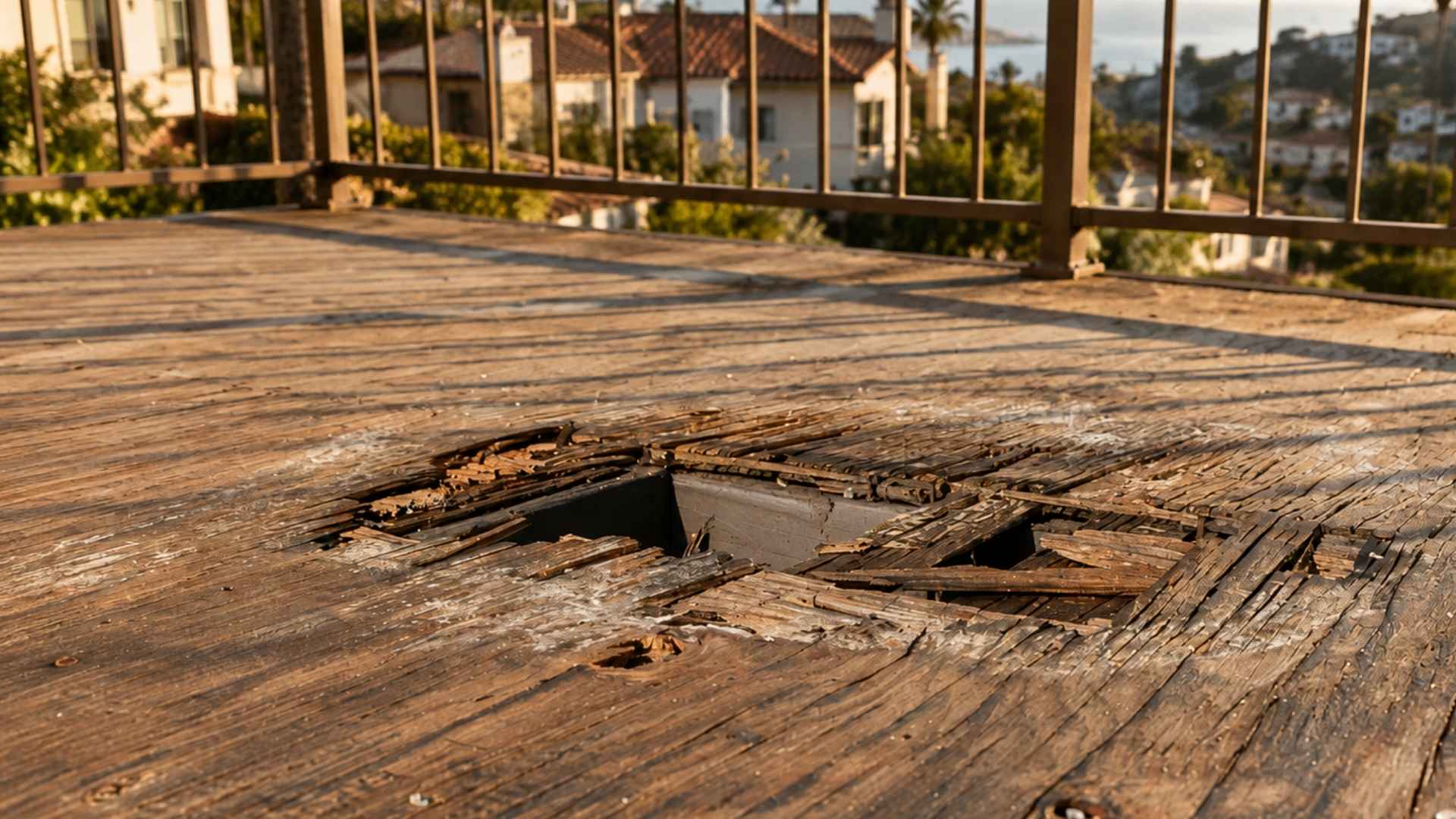
A deck may move slightly for reasons a qualified professional considers normal, or the reported movement may indicate a connection or framing concern. Staining may come from a surface issue, or it may be evidence that water has reached concealed wood. A cracked coating may require maintenance, or it may be one sign within a larger
waterproofing problem.
The owner should take the complaint seriously without telling residents that the deck is safe—or dangerous—before the right person evaluates it.
What should the property manager do first?
Record the date, time, resident’s exact description, location, photographs or video supplied, and whether the condition appears to be changing. Ask factual questions: What moved? When did it happen? Was anyone on the deck? Is water entering the unit? Is a railing loose? Did part of the surface break or fall?
Avoid coaching the resident or substituting conclusions for observations. “The resident reported movement at the outer railing” is more useful than “the balcony is failing,” unless an authorized professional has reached that conclusion.
Notify the person responsible for the property and preserve the communication. A verbal maintenance message should not disappear when a shift changes.
Should residents be kept off the deck?
If the reported condition appears to present an immediate danger, restrict access and obtain qualified professional guidance promptly. A manager does not need to wait for a routine inspection appointment before taking a reasonable temporary safety measure.
Access restrictions should be clear, documented, and communicated to affected residents. Do not use tape or a sign as a permanent substitute for evaluation. Do not remove a restriction simply because the condition looks unchanged the next morning.
When an authorized SB 721 inspector determines that an exterior elevated element poses an immediate threat, Health and Safety Code section 17973 requires immediate preventive measures. Preventing occupant access until emergency repairs can be completed constitutes one form of compliance.
Does a complaint automatically trigger an SB 721 inspection?
Not every complaint establishes that the structure is covered by SB 721, but it can reveal that the owner needs to determine the property’s inspection status immediately.
Section 17973 generally applies to buildings with three or more multifamily dwelling units and qualifying exterior elevated elements. The initial statewide inspection deadline for many existing covered buildings was January 1, 2026.
If the property has no qualifying report, the owner may face two separate questions: What does this particular complaint require now, and is the building already overdue for its statutory inspection? A prompt property review can help organize both issues without confusing them.
Who should evaluate the concern?
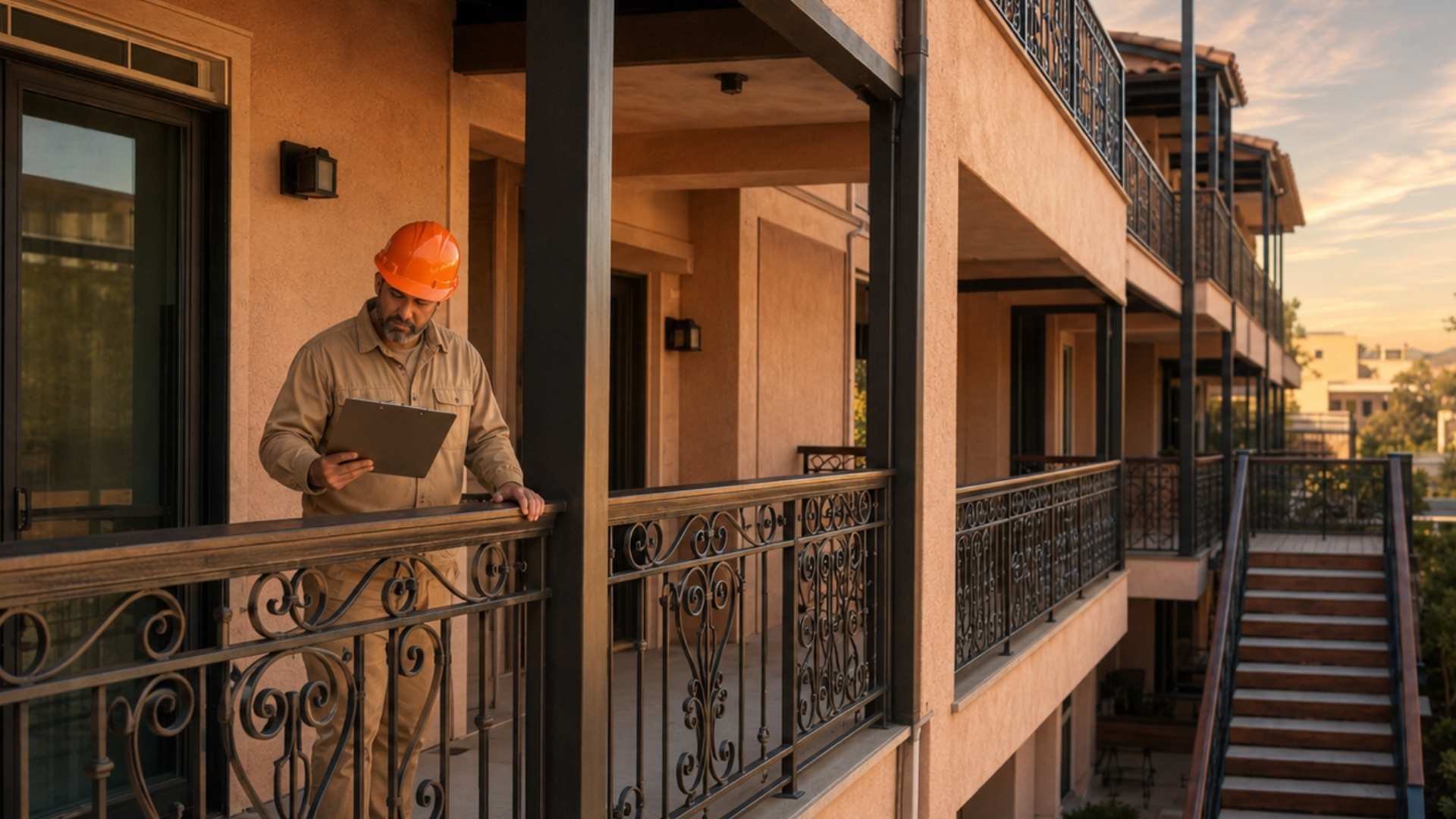
Maintenance staff can document observations, control access, and provide records, but they should not issue structural opinions beyond their qualifications.
An SB 721 inspection may be performed by a licensed architect; licensed civil or structural engineer; a qualifying A, B, or C-5 licensed contractor with the experience required by section 17973; or a qualifying certified building inspector or official recognized by the local jurisdiction.
Balcony & Deck Advisors helps identify the applicable inspection path, coordinate the authorized professional, organize resident access, and help the owner understand the report. The authorized professional performs the statutory evaluation and signs or stamps the report.
What should the owner say to the tenant?
The best communication is prompt, factual, and calm. Acknowledge the report, state any temporary access direction, explain that qualified evaluation is being arranged, and provide a contact for new observations.
Avoid minimizing phrases such as “it is probably nothing.” Avoid alarming statements such as “the balcony could collapse” unless a qualified professional has actually identified that danger.
A useful message might say:
Thank you for reporting the movement at the deck railing. Please do not use the deck while we arrange a professional review. We will update you when we have additional information. If you notice a change or believe there is an immediate emergency, contact management and emergency services as appropriate.
Specific notices, entry procedures, and tenant communications should be reviewed for compliance with applicable law and the property’s agreements.
What happens if the inspector identifies an immediate threat?
Under section 17973, the owner must take preventive measures immediately. The inspector must provide the applicable report to the owner and local enforcement agency within 15 days after completion.
Emergency work must follow the recommendations of an authorized professional, applicable manufacturer specifications, the California Building Standards Code, permit requirements, and local rules. The repaired condition must also be inspected and reported as required.
This is the point where organized communication matters. Residents need clear restrictions and updates; the owner needs a defined professional and construction response; and the file needs to show what was observed, decided, and completed.
What if the problem is not an emergency?
Not every finding requires evacuation or emergency shoring. The report may recommend maintenance, monitoring, further investigation, waterproofing work, or planned structural repairs.
The owner should follow the report’s categories and deadlines rather than allowing a non emergency finding to disappear into an ordinary maintenance list. Under SB 721, non emergency corrective work generally starts with a permit application within 120 days after receipt of the report, followed by completion within 120 days after permit approval unless the local enforcement agency grants an extension.
When repairs are recommended, affiliated company LA Construction Consultants (CSLB License #1061967) can separately review the findings, prepare a construction proposal, coordinate design professionals and permits when required, and perform approved work. Owners remain free to compare qualified proposals.
Why does the response record matter?
A clear record helps current and future managers understand what the tenant reported, how access was handled, who evaluated the condition, what the professional concluded, and whether recommended work was completed.
Silence creates uncertainty. A scattered chain of text messages and verbal instructions can leave the next manager unable to answer a basic question: “What did we do when the resident first raised this concern?”
The objective is not to create defensive paperwork. It is to manage safety, communication, and follow-through responsibly.
Related reading: Signs of water intrusion and dry rot · What happens during an SB 721 inspection
Next step: If a resident has raised a concern about a deck, balcony, exterior stair, or walkway, request a free project review through our Los Angeles deck inspection page or call 424-946-8057.
Written October 20, 2026. This article provides general information, not legal or engineering advice. Potentially dangerous conditions should be evaluated promptly by the appropriate qualified professional.